
Tap Dungeon Dungeons, Floors, and Biomes
Random card mazes with a floor lord standing between you and the next region.
Tap Dungeon sells the dungeon as the product. Not a town hub with daily quests, not a PvP ladder. You leave the Duchy of Lyle and tap through randomly generated deadly floors until a rebirth sends you back to plan a better mix. This page is the map logic. Combat buttons live in how to play. Loot trades live in artifacts.
What a floor looks like
Official footage is a card grid, not a fog-of-war blob. Tiles show forests, monsters, chests, tunnels, statues, and shrines in the same shot. That is your minimap. If a tile looks like a snake, it is a fight. If it looks like a wooden chest, it is a reward with a risk attached. If it looks like a stone mouth, it is probably a route. You do not need a fan-made overlay to read that board.
The demo only lets you see the first two floors. The full version is sold as a multi-floor dungeon with richer random generation, more enemies, more events, and more equipment. Do not judge depth from the preview. The demo notes list those limits in one place.
The floor lord gate
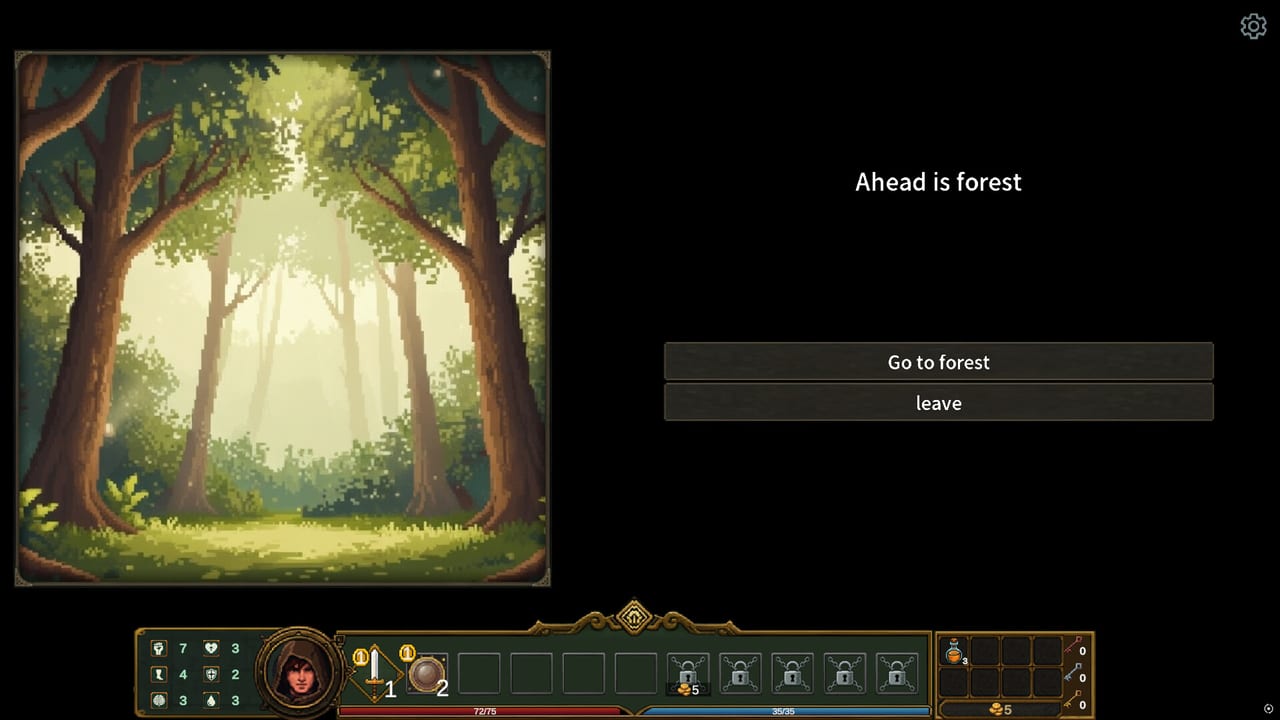
A forest screen in the trailer is blunt: the fork to the next region requires defeating the current floor’s lord. That single line is the walkthrough. You can wander, you can event, you can pick up four potions, but the gate does not care until the lord is dead. How to beat that fight is the same as any other elite in this game — bring a kit that can actually damage the target, keep a heal, and do not arrive with 12 HP because a gold pit looked funny. See builds if your numbers bounce.
Hidden bosses are a separate promise on the store page. They are not the same as the floor lord who opens the next region. Chase secrets after the honest boss is down, or you will recreate the classic roguelike story: “I died to a secret with the exit key in my bag.” The hidden boss guide is the patience lecture.
Official biomes and what they are for
The Steam description names forests, swamps, snowy plains, deserts, and abandoned ancient cities. Each step is a new path and unknown events. That is all the studio has publicly guaranteed. This wiki will not invent a swamp poison table or a desert heat meter that does not appear in store copy. What we can say as play advice:
- Forest footage looks bright and open, which makes players greedy. Greedy is how the meat pit happens.
- Swamp, snow, and desert are flagged as tonal shifts. Expect events and enemy packs to change flavour even if the HUD chrome stays the same.
- Abandoned ancient cities are the “this is the fantasy payoff” biome. If hidden bosses live anywhere in the marketing, ruined cities are the mood board.
When a new biome loads, reset your event budget. A key that was cheap in the forest can be lethal later. The getting started page already told you to read every yellow cost. That rule does not expire on floor three.
Random events are the dungeon’s personality
Xiao5 lists random events next to artifacts, hidden bosses, and sub-classes as the “you never know if the next room is a gift or a disaster” hook. Filmed examples:
- Gold and rotting meat in a pit (coins versus HP).
- Copper, silver, and gold keys on a pedestal.
- A beggar who wants a donation and can hand back potions.
Those events sit on the same floor as monster cards. Skipping them is legal. Taking all of them is how you starve the floor lord. The artifact notes treat events as item generation. This dungeon page treats them as map tax.
Enemies the store actually names
Greedy goblin tribes, savage orcs, and eerie undead armies. That is the published bestiary headline. Launch-week players also complained about enemies with absurd armor values that ignored a 30-damage skill. Whether that is a bug, a translation of a defense stat, or an intended brick wall, the play response is the same: do not assume your first skill bar deletes every tile. Bring a mix. If the tile still does not die, rebirth is cheaper than a forum post.
Difficulty in the full version
The demo locks difficulty to level 1. The full version advertises multiple difficulty challenges plus a talent system. Until Xiao5 publishes named difficulty labels in English patch notes, treat extra difficulties as “more pressure, same HUD.” Do not copy Nightmare/Hell names from unrelated dungeon games. If a hotfix adds labels, they will land on updates.
How to explore without a spoiler map
Because floors are random, a static map page would be a lie. Your process is the map:
- Scan the card grid for the floor lord route versus side treasure.
- Budget HP for one bad event and one fight.
- Clear the lord.
- Then spend leftover resources on optional tiles and hidden hunts.
- At a biome change, reopen this page’s biome list and the class hub if your kit suddenly feels off-role.
If you came here from a search for “Tap Dungeon map,” this is the honest answer: the map is generated, the gate is the floor lord, and the biomes are the five named regions on Steam. Everything else is a tap you have not taken yet.
Frequently Asked Questions
Launch-week answers for new adventurers from the Duchy of Lyle.
How many floors are in Tap Dungeon?
The demo has two. The full version is described as a multi-floor dungeon with richer generation. Xiao5 has not posted a public “there are exactly N floors” number in the store copy we used.
Do I have to fight the floor lord?
If you want the next region, yes. Official footage says the fork requires defeating the current floor’s lord.
Is there a static world map?
No public overworld map. Exploration is random card mazes across named biomes. Use this page plus how to play.
Where do hidden bosses fit on a floor?
They are optional store-promised hunts, not the gate boss. Read hidden bosses after you can clear a lord fight.